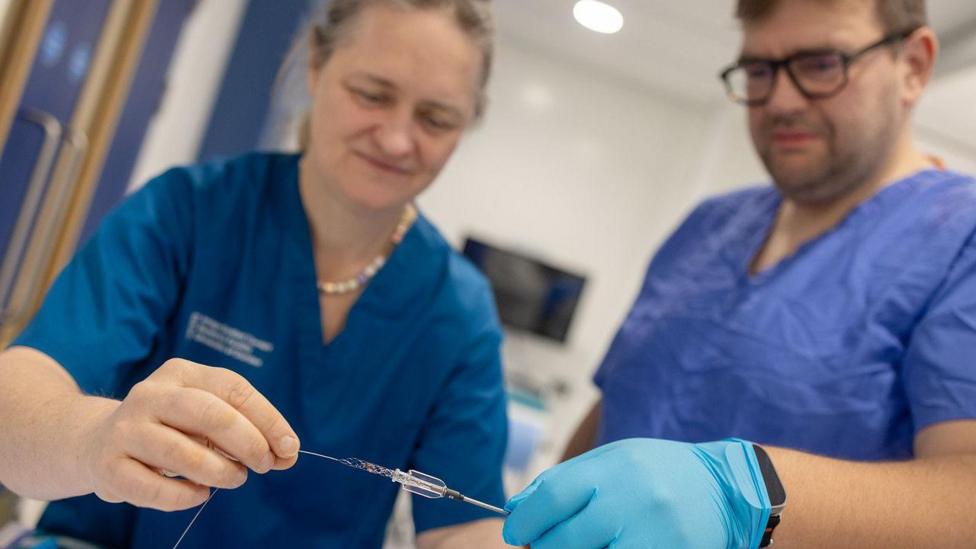
In a significant medical advancement, a professor from Dundee, Scotland, has collaborated with surgeons in the United States to conduct the first-ever remote thrombectomy on a human cadaver. Thrombectomy is a procedure used to remove blood clots from the brain, which can help in the treatment of stroke patients. The use of robotics in this context means that surgeons can perform such critical surgeries from hundreds of miles away, marking a remarkable step forward in both neuroscience and medical technology.
This pioneering surgery was conducted using robotic arms controlled from a distance, allowing the surgeon in Dundee to operate the instruments while the cadaver was in the US. This technique not only showcases the potential for high-quality medical care to be delivered regardless of location but also paves the way for future surgeries that could improve patient outcomes during emergencies when timely intervention is crucial.
The implications of this development can be far-reaching. With telemedicine already transforming healthcare, the integration of robotic technology can enhance capabilities, particularly in remote or underserved areas. By allowing skilled surgeons to operate from afar, it could ensure that patients receive the best possible care, regardless of where they are located. The ability to perform surgeries remotely could also help in training new surgeons, providing them with real-time experience guided by experts.
As we consider these advancements, it’s important to think critically about the ethical and practical implications of such technology. How might remote surgeries affect the doctor-patient relationship and the way medical teams collaborate? What challenges could arise in ensuring safety and precision when a human touch is replaced by technology?